
1987 vs. 2026
Is it possible for one of the greatest market crashes in history to happen again?

One of the world’s greatest investors of all time, Dr. Michael Burry just put out new analysis of the U.S. stock market being overvalued, highlighting that we may be near a major market top and comparing the risk to a possible 1987 fall.
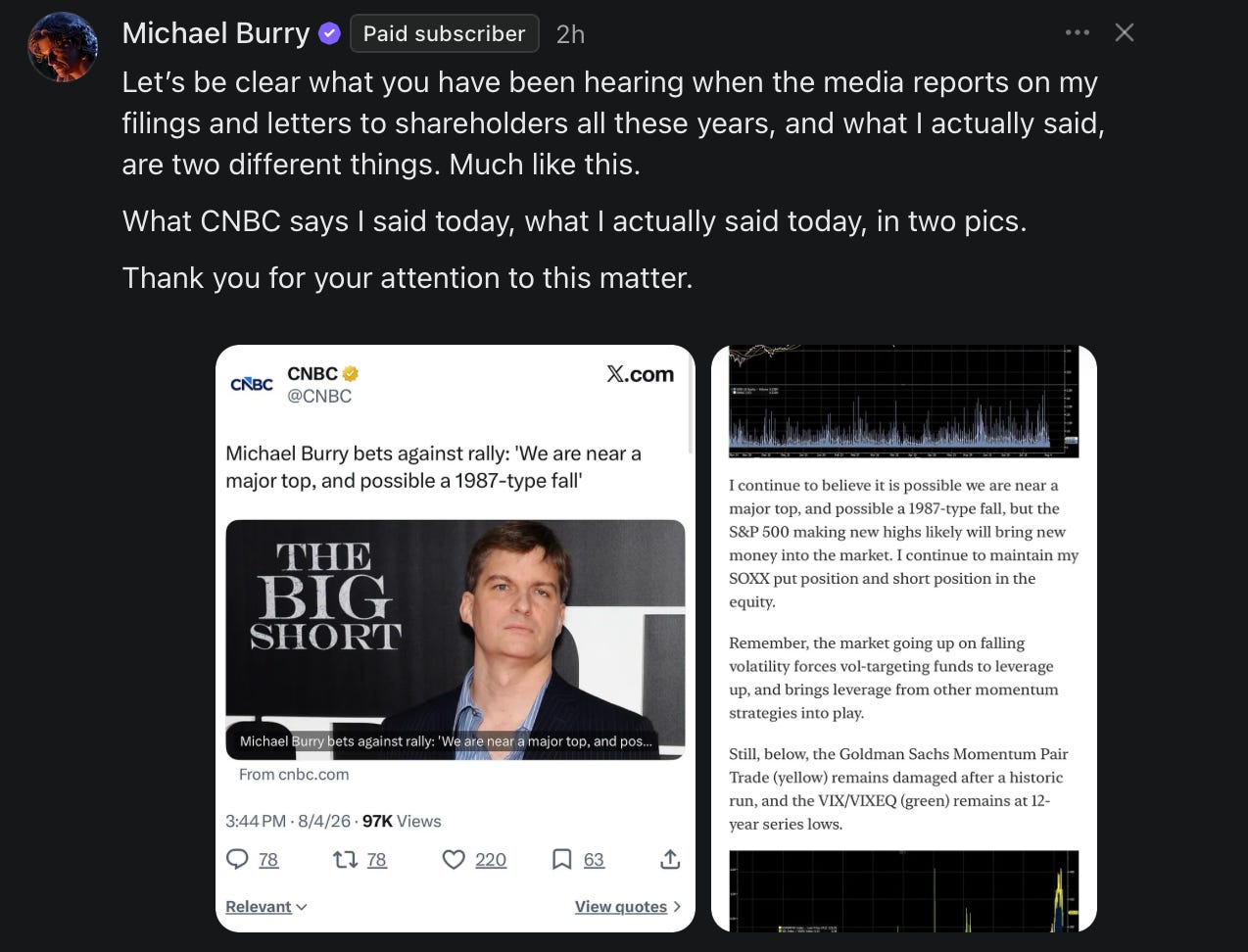
Dr. Burry has incredible data and analysis highlighting the risk in the market today, which are all credible concerns [ LINK HERE ]. The issue is that the financial media has taken his warning, and ignores the rest of his report about how he states that the “new highs will likely bring new money into the market” possibly sending the market higher on the short term basis.
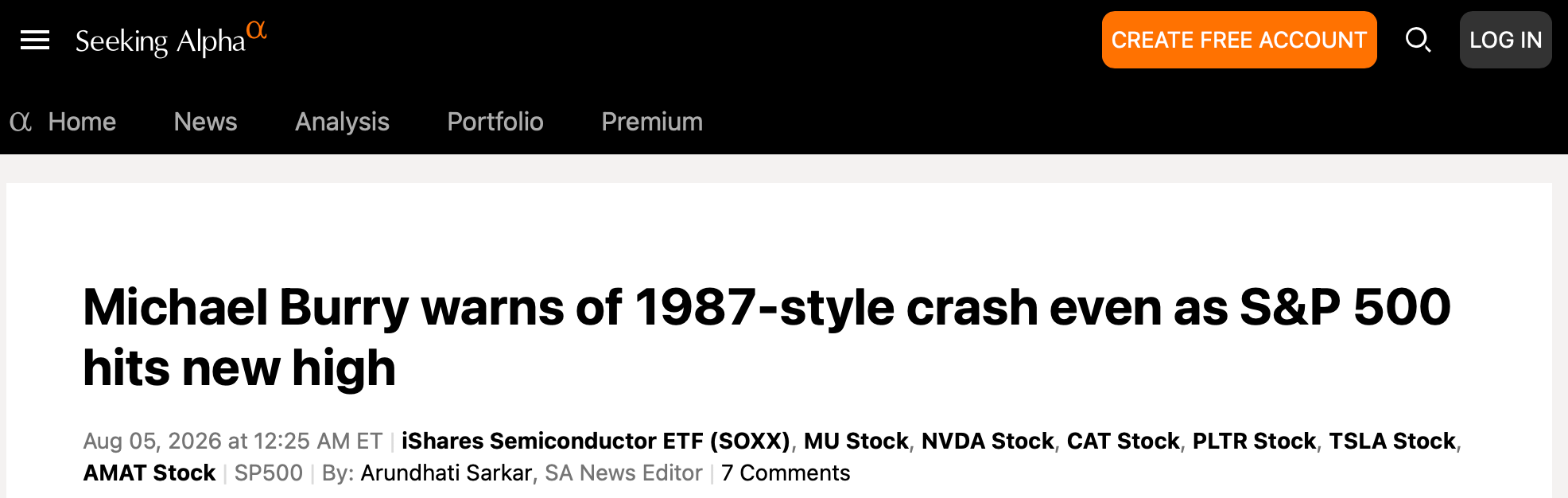
Today, we review the market of 1987 and analyze all the warnings and concerns that were raised back then. Then we will compare this with the current market in 2026 to determine if we are indeed experiencing a situation similar to the summer of 1987, when the market rallied before its dramatic October crash.
1987 Review
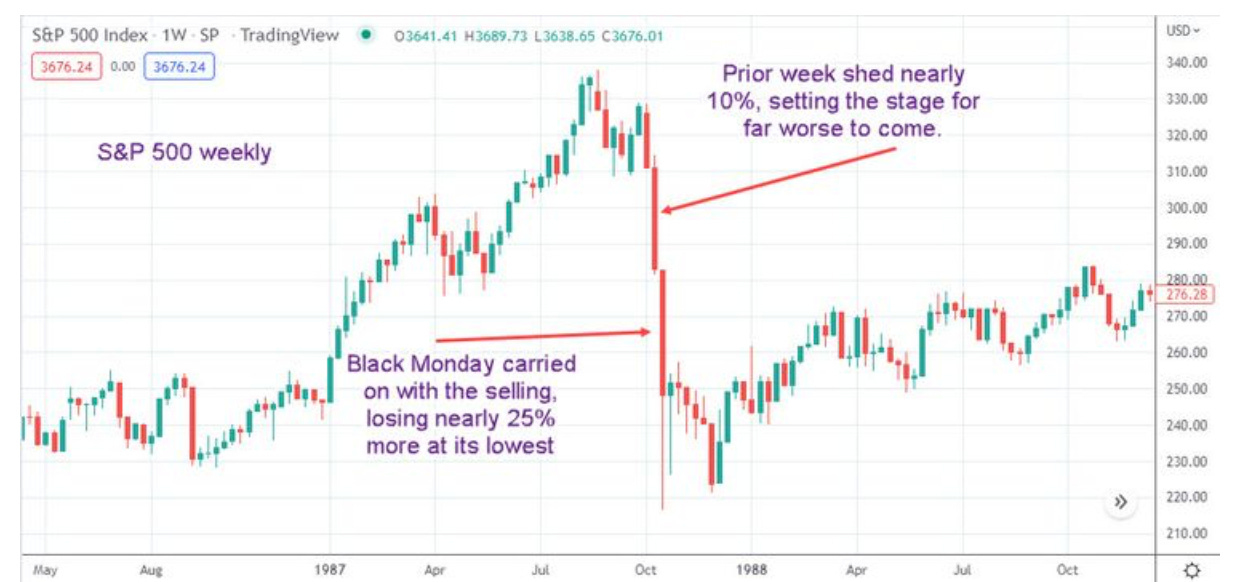
Before considering the possibility of a market crash on the scale of 1987 where the Dow fell exactly -22.6% in a single day and the SPY 0.00%↑ fell -20% we must first examine the market conditions that preceded it.
The Lead up
The S&P 500 started 1987 in a robust bull market. By August, the index had surged over +35%. (today the SPY 0.00%↑ is up 22% YoY).
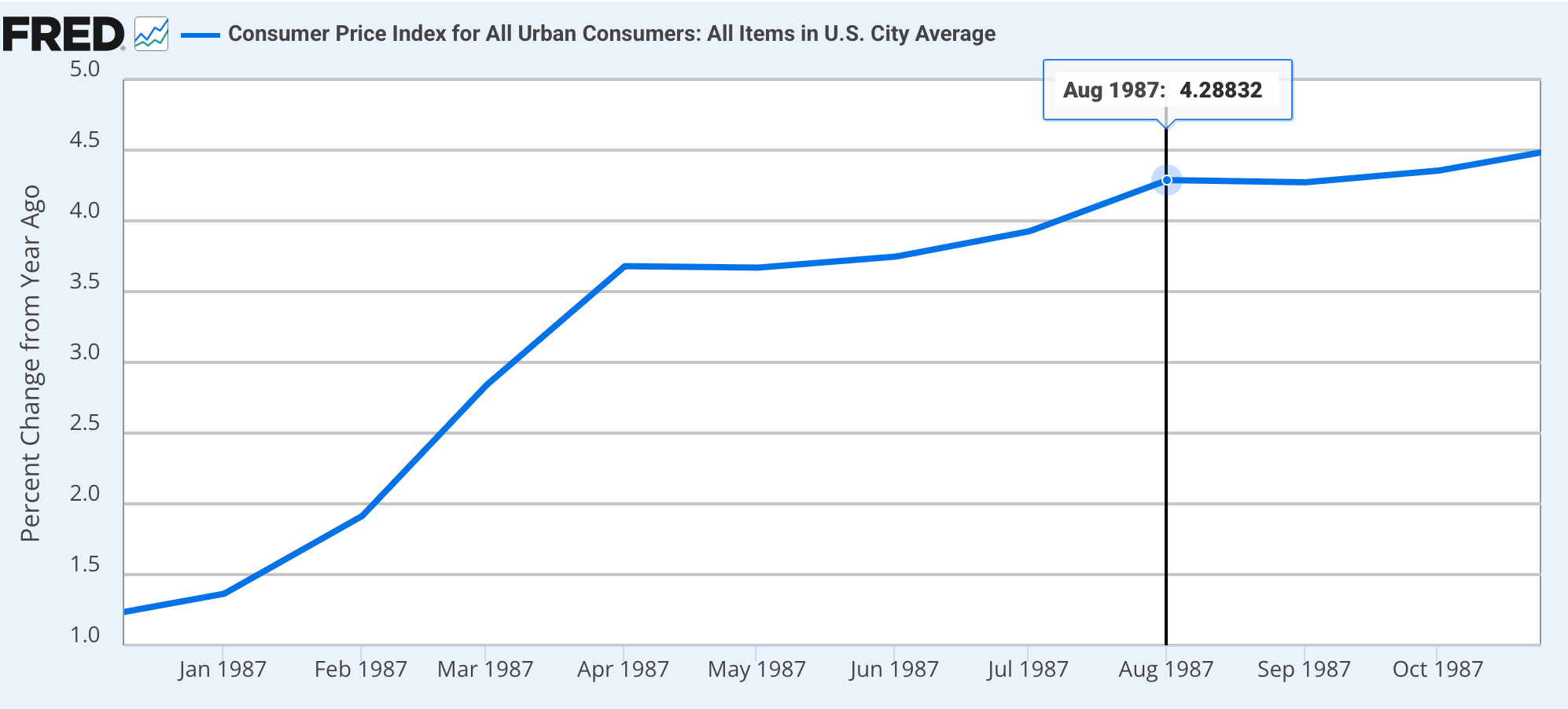
Earnings remained solid (like today based on private investments), and the economy continued its expansion. Stocks were soaring even while the Iran-Iraq Tanker War increased geopolitical risk and oil market uncertainty (like today). Inflation was reaccelerating, hitting 4.2% in August of 1987. (like it is today).
Bond investors began demanding higher compensation for inflation. The 10-year bond rose from 8.3% in early July to over 10.2% just before the October crash.
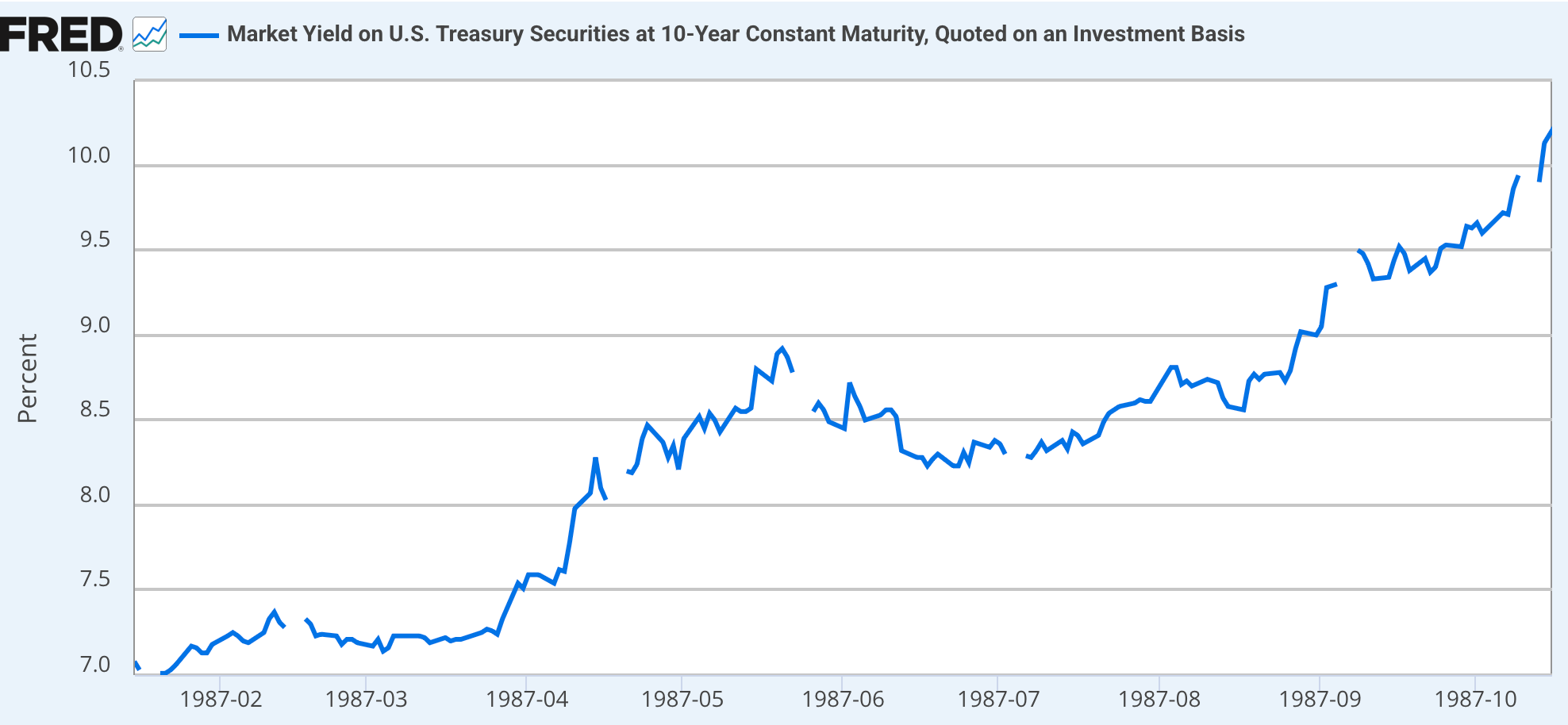
Alan Greenspan assumed the position of Federal Reserve chairman on August 11, succeeding Paul Volcker. On September 4, the Fed voted to raise rates.
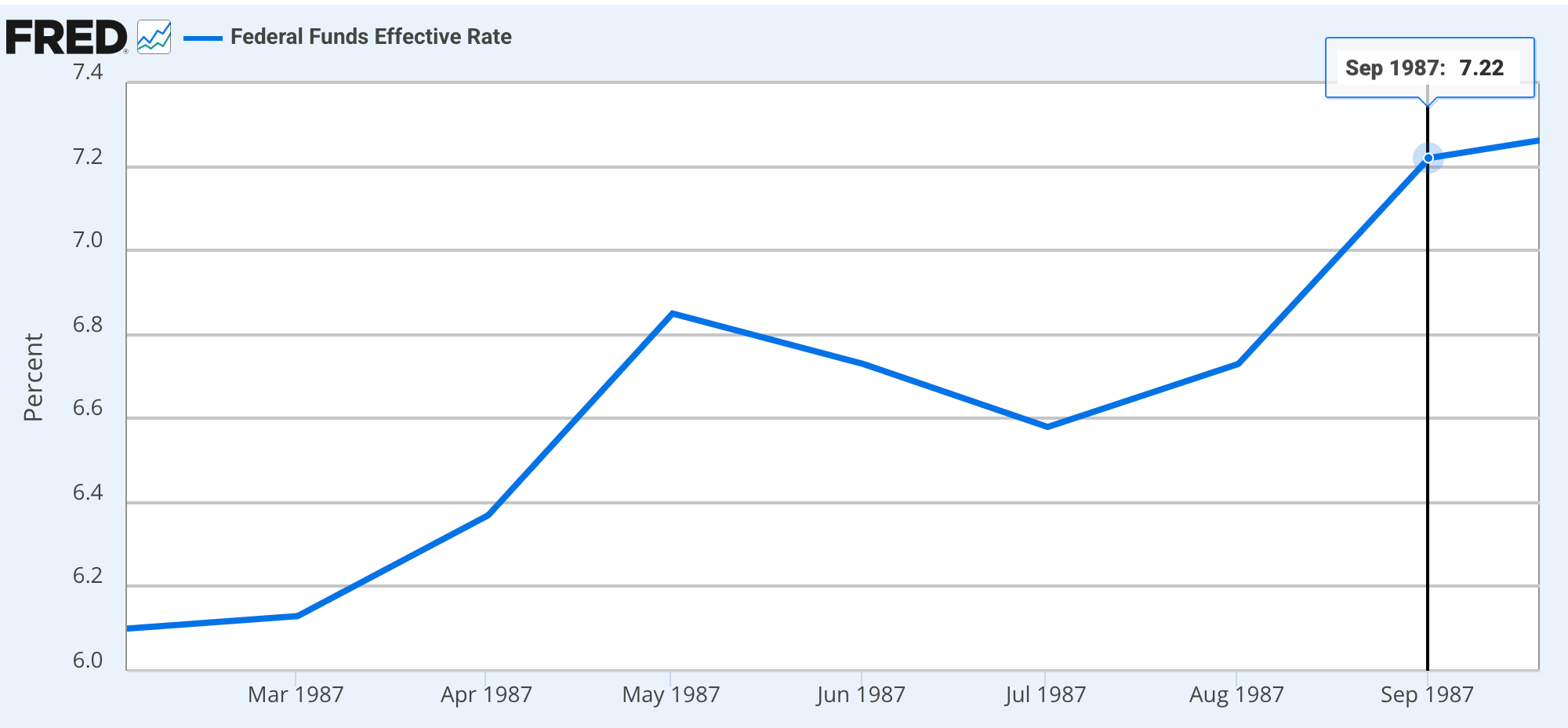
Monetary conditions continued to tighten, and the stock market disregarded the bond market. However, this strategy proved unsuccessful, as the new Fed Chair went to D.C. at the beginning of October to warn about the risk of inflation and the valuation of the stock market.
The Crash
Portfolio insurance then completed the trap. These strategies were designed to mitigate stock exposure during market declines, often by selling index futures. One institution employing this strategy might have reduced its losses. However, hundreds of institutions following it simultaneously created a systemic feedback loop as famous author Michael Lewis states in the video below.
As futures prices fell below cash-market prices, arbitrageurs sold stocks and purchased cheaper futures. This transfer of selling pressure shifted from Chicago to New York. On October 19, approximately 40% of non-market-maker futures sales were reportedly attributed to portfolio insurers, although portfolio insurance was not the sole cause of the crash.
The system attempted to safeguard individual portfolios by creating a promise that could not be fulfilled collectively. Everyone believed they could exit through the same narrow door.
Single Day Risk
Due to the 1987 crash, the U.S. and most advanced markets have established and implemented circuit breaker rules. These circuit breakers essentially halt stock market trading for an extended period when declines are massive. Those levels are:
Level 1: A -7% decline triggers a 15-minute trading halt, provided the decline occurs before 3:25 p.m. Eastern Time.
Level 2: A -13% decline also results in a 15-minute trading halt, with the same time restriction.
Level 3: A -20% decline leads to a trading halt for the entire day, regardless of the time of occurrence.
These measures are to prevent the stock market from repeating the catastrophic single day crash of October 1987. Meaning that we can never have a single down day greater than what happened on Black Monday of 1987.
Join the Full Access Team
Get the risk matrix comparison that includes the probabilities of various events occurring and more!
Valuation, Inflation & Leverage: Why Today’s Market Is More Fragile Than 1987
