

An in-depth analysis to AI CapEx on Big Tech—why massive spending distorts ROI, resets valuations, and causes price volatility despite earnings beats. This is for all investors from Wall Street to Main Street. Best read with your coffee or evening cocktail.
ROI
In the hit comedy TV show, Silicon Valley, Russ Hanneman gets upset when he hears the most dangerous word in venture capital land: REVENUE. He lunges into the conversation and hits the CEO with a hard stop:
“No, no, no revenue. Why would you go after revenue? If you go after revenue, people will start asking how much, and it will never be enough. The company that was 100x or the 1,000x becomes the 2x dog. But if you have you no revenue, you can say you pre revenue, your a potential pure play. It's not about how much you earn. It's about what you're worth. And who's worth the most? Companies that lose money. Pintrest, Snapchat, no revenue. Amazon has lost money for every fucking quarter for the last 20 fucking years and that Jeff Bezos is the king. No one wants to revenue.”
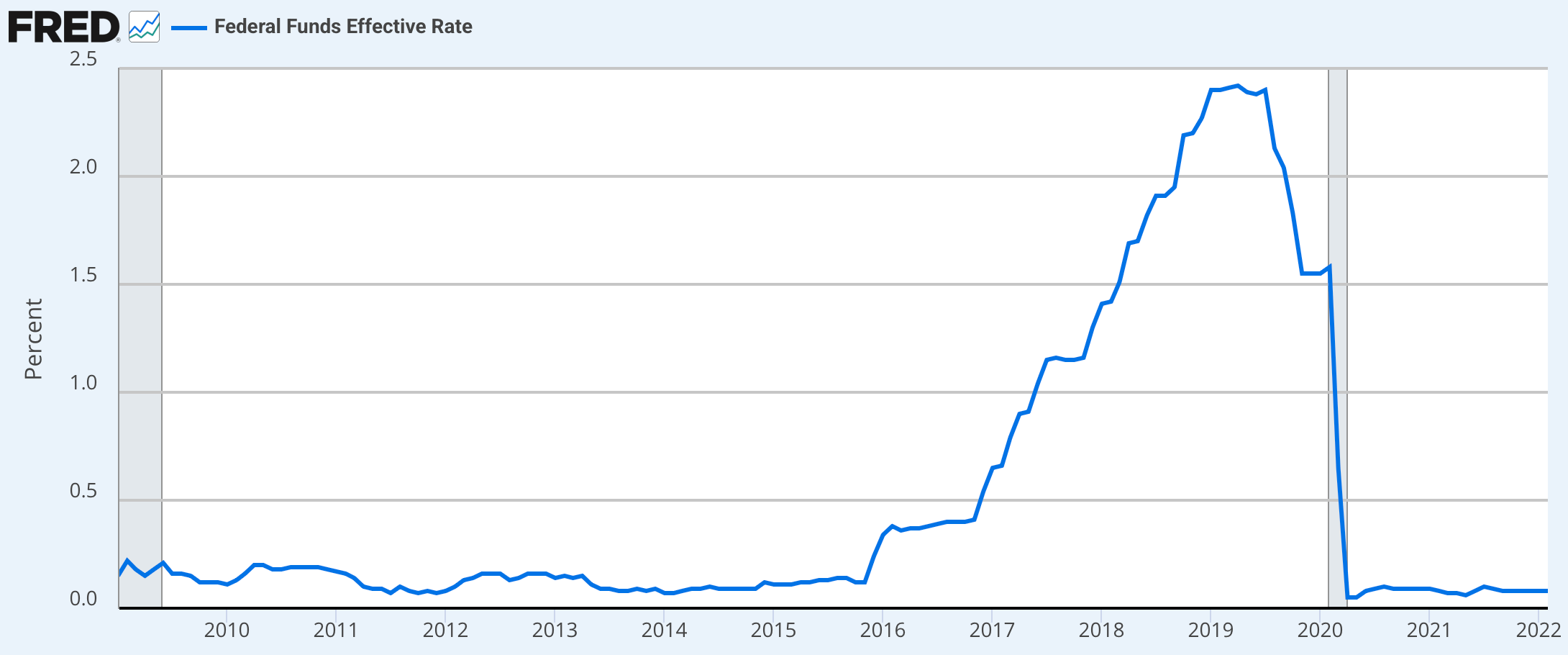
That line captures the market’s operating system for the past decade that followed 2009 recession. When interest rates were artificially low (0% for a decade plus), the price of time collapsed. Future cash flows didn’t get punished for being distant. Companies didn’t need to prove ROI because “tomorrow” was essentially free. Wall Street didn’t demand results. It sold potential pure plays to investors.
That’s how you get an entire market of “pure plays.” Companies that didn’t need profits—and sometimes didn’t even need dependable revenue—because the story itself carried the valuation like crypto companies, EV companies, & the “work form home”. In that regime, you didn’t want to show the number revenue too early, because the number limits the dream. Russ Hanneman wasn’t a character. He was Wall Streets story for the past decade.
And the dark engine powering that entire regime was debt. When money is cheap, cash-burning companies don’t need to survive on earnings — they survive on refinancing. After the Financial Crisis, the effective federal funds rate spent long stretches pinned near zero, falling to roughly 0.5% in 2009 and returning to the floor again during the 2020 event.
In that world, time itself was mispriced. Companies didn’t have to fix business models; they only had to roll maturities. Borrow, refinance, refinance again — and call it “strategic flexibility.”
The bond market became a corporate life-support system. U.S. investment-grade bond issuance surged to about $1.8 trillion in 2020 and climbed again to roughly $1.7 trillion in 2025, just below that peak. The U.S. corporate bond market now stands near $11.5 trillion outstanding, with over $1 trillion of debt maturing annually, keeping the refinancing machine running. With interest rates now around 4.25%, bonds become competition again. The discount rate has returned to the mix. Suddenly, the market cares about when cash arrives, not just if a slide deck says it will. The party isn’t ending because optimism died. It may be ending because the 100x is now the 2x dog.
Now zoom into the present problem: mega-cap tech. Microsoft, Google, Amazon, Meta, and Tesla are so large that the law of large numbers has them in a chokehold today. They can still grow—but the market has to keep paying premium prices & multiples for that growth in a higher-rate world.
In Russ Hanneman language, they have become the “2X dog”: the mature winner that can still perform, but can’t promise the kind of upside ROI that keeps Wall Street intoxicated.
Nobody wants the 2X dog. They want the pure play. They want 100x.
So how do trillion-dollar companies go from a 2x dog back to a 1,000x
“Pure Play”
They tare down the old business, & start a new one, AI.
PURE PLAY BUILD OUT
The most important shift of 2026 is that AI has moved from an app story to an infrastructure war. Compute is physical. Data centers are physical. Power is physical. Custom silicon is physical. That’s why the new battleground isn’t “AI features.” It’s capex intensity and ROI credibility.
The market is now being asked to fund a multi-year bridge: massive capital spending today, uncertain payoff tomorrow. Google has guided 2026 capex in the $175–$185 billion range. Amazon is around $200 billion. Meta has guided $115–$135 billion. Microsoft’s capex shot up to $105 billion, and management has explicitly acknowledged margin pressure tied to scaling AI infrastructure. Tesla’s call commentary has pointed to capex above $20 billion for 2026.
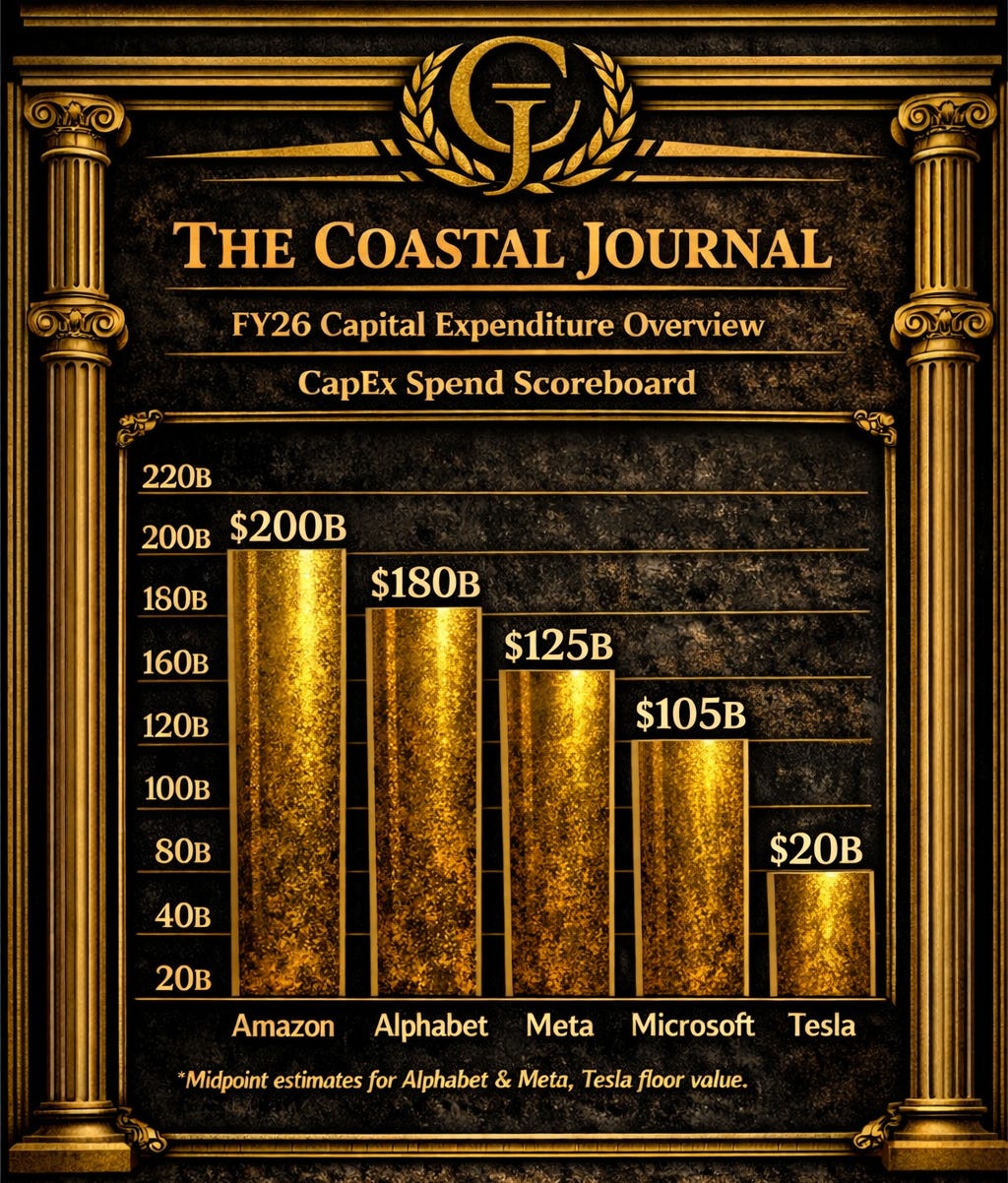
Here’s the trap: the same spending that creates the “pure play” AI narrative also threatens the very thing that held these stock prices up over the past few years—fat free cash flow and expanding margins. If ROI doesn’t show up quickly (by 2026), investors don’t need AI to fail to punish the stock price lower. They only need the timeline to slip.
That’s why Chief Market Strategist Greg Crennan has been laser-focused on one metric the market is still largely ignoring: CAPEX-to-revenue.
This ratio cuts through the hype. It measures how much real capital a company must deploy to sustain each dollar of growth. In early-stage startups, high CAPEX-to-revenue is normal. In trillion-dollar companies trading at premium multiples, it’s a warning flare: rising CAPEX intensity means growth is being purchased, not simply earned.
And now we’re watching something straight out of Silicon Valley: The largest companies in the world trying to “pivot” into a new identity—the next “pure play.” But pure plays are built in garages. These are empires rebuilding mid-flight, with CAPEX as the fuel and your multiple as the collateral.
Coastal Journal why this matters (if you own or buy the company at today’s prices): these companies don’t pay dividends that meaningfully to compete with 4–5% Treasury yields, so you’re not buying them for income — you’re paying up for earnings growth and the future to arrive on schedule: steady margins, strong cash flow, and visible ROI. CAPEX-heavy reinvention threatens that path. Even if the company stays healthy, rising spending can squeeze free cash flow and compress margins, forcing a re-price lower for the stock. At premium multiples, stocks don’t need “bad” news to drop — they only need “not as fast as promised.”
That’s the danger. It’s not that AI fails. It’s that returns arrive late. When CAPEX rises faster than revenue, free cash flow loses oxygen, margins wobble, and the market recalibrates what it’s willing to pay — because it isn’t paying for effort. It’s paying for proof.
So the question is this: as Big Tech leans into AI CAPEX like a startup chasing a new S-curve, does 2026 become the year investors demand visible ROI and force a multiple reset — turning “Magnificent” into “construction project”?
Full Access Team Gets the Answers to:
MSFT 0.00%↑ GOOG 0.00%↑ AMZN 0.00%↑ META 0.00%↑ TSLA 0.00%↑ risk grading system ( 🟢 / 🟡 / 🟠 /🔴) measuring valuation strain, CAPEX intensity, and margin vulnerability
The implied growth the market must believe for each stock using the Crennan “Punisher” formula
Which of today’s tech giants could emerge as tomorrow’s true AI “pure play”—and which ones are quietly becoming the next 2x dog or worst!
